
Ultra casino Plinko
Introduction
Plinko looks almost disarmingly simple at first glance. A ball drops from the top of a pegged board, bounces left and right on the way down, and lands in a slot with a fixed multiplier. That is the whole visual premise. Yet on the Ultra casino Plinko page, this minimal setup creates a very specific kind of gambling experience: fast, transparent, and far more psychologically charged than its stripped-back interface suggests.
I have spent enough time reviewing casino products to know that simple design often hides the most important questions. In Plinko, the key issue is not how the board looks, but what the board means for the player in practice. How often do low multipliers appear? What changes when the risk level is switched? Why can two sessions with the same stake feel completely different? And why do some players find Plinko more gripping than many slots, even though it has no reels, no Ultra Casino bonus review rounds, and no cinematic presentation?
This is exactly why Ultra casino Plinko deserves a focused review. It is not just another casual side game. It is a probability-driven format built around short cycles, visible randomness, and highly variable outcomes. For some players, that makes it one of the cleanest casino games to understand. For others, it can become repetitive or harsher than expected. The important part is to know what it really offers before pressing drop.
What Ultra casino Plinko is and why it draws so much attention
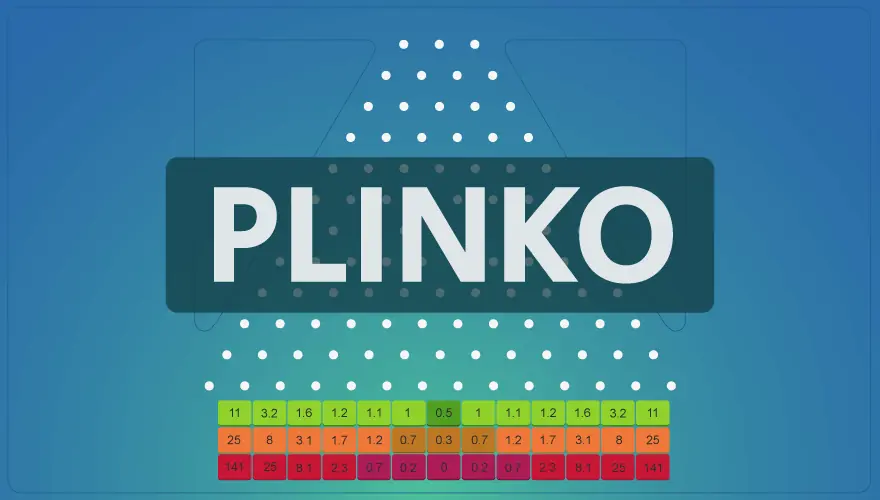
Plinko is a ball-drop gambling game where each round begins with a player choosing a stake and, in most versions, adjusting settings such as risk level and the number of rows. Once the ball is released, it collides with pegs on the board and eventually lands in one of several payout slots at the bottom. Each slot corresponds to a multiplier. Most of the central slots pay less, while the extreme edges carry the biggest rewards and also appear less often.
The reason this format became so noticeable is straightforward: it compresses an entire gambling cycle into a few seconds and shows the random path in real time. Unlike a slot spin, where the outcome is presented through reels and symbols, Plinko lets the player watch the event unfold as a physical-looking sequence. That visual journey matters. Even when the result is mathematically predetermined by the game engine at the moment of launch, the bouncing motion creates suspense in a way that feels immediate and tangible.
On the Ultra casino Plinko page, the appeal is usually built on three things:
Clarity. Players can instantly see the board, the potential multipliers, and the basic logic of the round.
Speed. A session can move very quickly, especially for users who prefer repeated drops over long-form bonus features.
Control over session style. Risk settings and board depth can change the character of play more than many newcomers expect.
One of the most interesting things about Plinko is that it feels honest in its simplicity while still being emotionally deceptive. You see the full board. You see where the big multipliers are. You understand the target. But that visibility can make players overestimate their influence over the result. In reality, the game remains a random event generator dressed in a very readable form.
How the core Plinko mechanics actually work
To understand Ultra casino Plinko properly, it helps to separate the visual layer from the mathematical layer. Visually, the ball appears to bounce through a field of pegs, moving left or right with each collision until it reaches the bottom. Mathematically, the distribution of outcomes is shaped by the game’s internal probability model, the selected number of rows, and the chosen risk profile.
In practical terms, the player usually interacts with several core variables:
Bet size — the amount staked on each drop.
Rows — the depth of the board, which affects how many possible paths the ball can take.
Risk level — a setting that changes the payout map and outcome distribution.
Auto mode — in some versions, repeated drops can be automated, which changes the pace of the session significantly.
Multiplier values are not drawn at random per drop; the payout table is fixed before the round starts, so the house edge stays constant no matter how the ball bounces. Adjusting the number of rows changes both the risk profile and the practical pace of play, since more rows lengthen each drop and widen the spread of possible outcomes. The volatility setting effectively reweights the same physical board, letting a player shift between frequent small hits and rarer, larger payouts without learning a new game. Understanding this structure matters most when choosing a stake, because the expected return per drop stays steady while the variance in your bankroll swings far more than the visuals suggest.
That said, the simplicity can be misleading. The ball does not “try” to reach a high-paying edge in any strategic sense. There is no timing skill, no angle control, and no pattern exploitation that a player can reliably use. The outcome remains random within the framework defined by the game settings. The practical lesson is important: Plinko can be understood quickly, but it should not be mistaken for a game where observation turns into control.
Risk levels, rows, and why the same game can feel completely different
Risk levels in Plinko do far more than adjust a multiplier slider; they mathematically redefine the variance profile of every single drop. A low-risk configuration typically tightens the payout band, producing frequent but modest returns that keep the bankroll curve relatively stable over extended sessions — in most cases, the hit rate climbs noticeably while the average win size shrinks. High-risk settings invert that relationship: they concentrate a larger share of the theoretical return into the outermost peg slots, which means the common outcome becomes a small loss or a near-zero return, punctuated by rare, substantial payouts. The practical consequence is that two players wagering identical amounts on the same board can experience wildly different bankroll trajectories — one grinds steadily upward with occasional flat spots, the other endures long negative stretches waiting for a single spike. Industry-standard variance for Plinko-style games typically ranges from low-volatility configurations where the standard deviation sits a fraction of the average bet, to high-volatility setups where it can exceed several multiples of the stake, and the house edge itself usually remains unchanged across risk levels — only the distribution of that edge shifts. Players who prefer sustained session length and predictable cashout intervals generally align with low or medium risk, while those chasing tournament-style leaderboard swings or accepting longer losing runs for a shot at the top multipliers tend to favour the aggressive end of the spectrum. Reading the payout table before adjusting the slider is the most reliable way to gauge whether the risk profile matches your intended session length and bankroll tolerance.
The number of rows matters for a similar reason. A deeper board gives the ball more decision points on the way down, which broadens the sense of uncertainty and often stretches the payout ladder. In user terms, more rows can make the game feel more suspenseful because the path looks longer and the rare top multipliers stand out more strongly. But the trade-off is obvious: those standout results are usually harder to hit.
Here is a practical comparison of how settings tend to affect gameplay:
| Setting | What changes on screen | What it means in practice |
|---|---|---|
| Low risk | More balanced multipliers, fewer extreme top values | More stable short sessions, but less explosive upside |
| Medium risk | Broader spread between common and rare slots | Mix of routine returns and occasional stronger hits |
| High risk | Very large edge multipliers, weaker average landing zones | Sharper swings, longer dry stretches, bigger emotional pressure |
| Fewer rows | Shorter path, simpler board | Faster rounds, less visual build-up, more straightforward pacing |
| More rows | Longer path, wider multiplier spread | Greater suspense, stronger variance feel, more attention on rare outcomes |
One detail that many players only understand after a few sessions is this: changing the risk level in Plinko does not merely alter “how much you can win.” It changes what a normal session feels like. On high risk, losing momentum can arrive quickly because many drops cluster around low returns while the large multipliers remain distant. On low risk, the session may feel smoother, but some players start to find it too flat because the upside is limited.
That is one of the defining traits of Ultra casino Plinko. It is a simple interface with a surprisingly strong personality shift depending on settings.
Why the game feels engaging despite its minimal design
Plinko does not rely on theme, storyline, or feature overload. Its engagement comes from rhythm. Each round is short, visually legible, and open to immediate repetition. That creates a loop that many casino products aim for but do not always achieve so cleanly.
In practice, the game builds tension through three layers at once:
Visible path uncertainty. The ball remains in motion long enough to create anticipation, even though the round is brief.
Asymmetric reward structure. The eye is naturally drawn to the rare high multipliers on the edges.
Fast decision reset. After each result, the player can instantly drop again, adjust the setup, or chase a different session rhythm.
That loop is powerful because it sits between passive and active play. Slots are often more passive: spin, reveal, repeat. online blackjack at Ultra Casino can feel more procedural or strategic. Plinko occupies a middle ground. You are not making tactical decisions during the drop, but you are shaping the session through configuration choices. That gives the player a sense of involvement without introducing real skill-based control.
A memorable observation here is that Plinko often feels more dramatic when nothing special happens. A slot can produce a dead spin in a fraction of a second and move on. Plinko makes you watch the miss develop in front of you. The ball flirts with a better lane, clips a peg, drifts back toward the center, and settles into a modest multiplier. That tiny visual delay is one of the reasons the format sticks in people’s minds.
What players should understand about probabilities and session outcomes
If I had to isolate the single most important thing to know before playing Ultra casino Plinko, it would be this: the game’s fairness and the game’s feel are not the same thing. A fair random distribution can still produce long stretches of underwhelming returns, especially on aggressive settings. Players who read the board but do not respect the probability curve often misjudge what a realistic session looks like.
The central slots are common for a reason. There are more possible paths leading toward the middle than toward the extreme edges. The highest multipliers are not “due” after a series of average results. Plinko has no memory in that sense. Ten ordinary drops in a row do not make the next one more likely to land on a top-value segment.
This matters because the game can encourage a false reading of momentum. Watching the ball bounce close to a high-paying edge creates the impression that a big result is hovering nearby. Mathematically, near-misses do not build pressure in the system. Psychologically, they absolutely do. That gap between math and emotion is central to the Plinko experience.
Here is a practical breakdown:
| Player assumption | What actually matters |
|---|---|
| “It almost hit the edge, so a big result may be coming.” | Each drop is an independent event within the game’s probability model. |
| “High risk just means bigger possible rewards.” | High risk also means a harsher average session texture and deeper swings. |
| “Simple interface means simple bankroll behavior.” | Fast rounds can accelerate losses if stake size and tempo are not controlled. |
| “I can learn the board and improve outcomes.” | You can improve session discipline, not the random path itself. |
Another useful observation: Plinko can produce a misleading sense of transparency. Because the board is visible, players may feel they understand the odds more deeply than they actually do. But seeing the layout is not the same as calculating the real distribution of returns over time. The game is easy to read visually and still easy to misread behaviorally.
How risky Ultra casino Plinko is and who it suits best
Plinko can range from relatively mild to highly aggressive depending on configuration. That is why broad statements about its volatility often miss the point. The format itself is flexible. The real question is how the player uses it.
For cautious players, a lower-risk setup with modest stakes can turn Plinko into a short-session, low-complexity option. It will not remove uncertainty, but it can reduce the shock of repeated hard misses. For more aggressive users, higher risk and deeper boards create the kind of session where a rare multiplier can define the entire outcome. The price for that upside is inconsistency. Anyone stuck on account verification can follow the steps laid out in Sweet Bonanza real money slot at Ultra Casino.
In my view, Ultra casino Plinko tends to suit the following profiles:
players who prefer quick rounds over long bonus sequences;
users who like visible outcome logic rather than reel-based abstraction;
people comfortable with adjusting settings to shape session tone;
those who understand that randomness can feel personal even when it is not.
It may be a weaker fit for players who want narrative features, layered progression, or the sense of discovery that many modern video slots provide. It can also frustrate users who react strongly to repeated small returns while waiting for a rare high multiplier. In other words, Plinko works best for players who value clean structure and accept that short cycles can still carry sharp bankroll pressure.
How Plinko differs from slots and other casino games
The easiest comparison is with classic slots, because that is where many players arrive from. Slots usually revolve around reels, symbol combinations, paylines or ways, and additional rounds such as Ultra Casino free spins practical player guide, multipliers, expanding symbols, or bonus buys. Plinko strips almost all of that away. Instead of layered content, it offers a single-event model repeated at speed.
That difference affects the player experience in several ways:
Less decorative complexity. There are no reel sets to interpret or special symbols to track.
More visible distribution logic. The board shows where the high multipliers are and why they matter.
Shorter emotional cycles. Every drop resolves quickly, with no long buildup toward a feature round.
Fewer false layers of agency. You are mainly choosing session parameters, not interacting with symbolic systems.
Compared with roulette, Plinko is less formal and more visual in motion. Compared with blackjack, it removes decision-making during the round. Compared with crash games guide for Ultra Casino users, it trades timing pressure for path suspense. That last comparison is especially useful. Crash asks when to exit. Plinko asks whether you can tolerate repeated uncertainty without any intervention once the ball is released.
A second memorable observation is that Plinko often feels like a bridge between arcade aesthetics and casino mathematics. It looks almost playful, but the bankroll consequences can be as serious as in far more traditional formats. That contrast is part of its appeal and part of its danger.
Practical strengths and limitations of the format
Ultra casino Plinko has clear strengths, but they only matter if they align with the player’s expectations. The game is strongest when judged on usability, pace, and transparency of structure. It is weaker when judged on variety, depth of content, or strategic involvement.
Here is a balanced view:
Strong point: immediate readability. New players can understand the basic flow in seconds.
Strong point: adjustable session character. Risk and rows meaningfully change the feel of play.
Strong point: efficient pacing. It suits short sessions and players who dislike long setup screens.
Weak point: repetition risk. Without features or evolving states, some users lose interest quickly.
Weak point: hidden harshness behind a simple interface. Fast cycles can drain a balance faster than expected.
Weak point: no real skill expression. Configuration choices matter, but they do not create mastery over outcomes.
The biggest practical limitation is that Plinko can become emotionally louder than it looks. A board, a ball, and a few multipliers do not seem intimidating. But once the session speed increases, the combination of frequent drops and visible near-misses can push players into reactive decisions. That is not a flaw in the software alone; it is part of how the format naturally behaves.
What to check before launching a session on Ultra casino Plinko
Before starting, I recommend treating Plinko less like a novelty and more like a configurable probability tool. A few small checks can change the quality of the session significantly.
Look at the risk setting first. Do not start on high risk just because the top multiplier looks attractive.
Check how the rows affect the board. More rows can increase suspense, but they also change the distribution feel.
Set a stake that matches the game’s speed. Fast rounds amplify the effect of poor bet sizing.
Use demo mode if available. It helps you understand the rhythm without immediate bankroll pressure.
Decide what kind of session you want. Smooth and controlled, or swing-heavy and speculative. Plinko can do both, but not at the same time.
The third standout observation is this: in Plinko, session planning matters more than round planning. There is almost nothing to “do” during an individual drop. The real decisions happen before the ball is released and in how consistently you stick to those choices afterward.
Final verdict on Ultra casino Plinko
Ultra casino Plinko offers a very specific gambling experience: quick, visually transparent, and driven by adjustable probability rather than feature-rich entertainment. Its strongest asset is clarity. You can understand the board immediately, see where the extreme multipliers sit, and shape the tone of the session through risk and row settings. That makes it accessible in a way many slots are not.
At the same time, the game deserves more caution than its clean interface suggests. The simplicity is real, but so is the potential for sharp swings, especially on aggressive settings. Plinko does not hide behind complex symbols or long bonus chains. It puts randomness in front of the player and lets the tension come from the path itself. For some, that feels refreshingly direct. For others, it can become repetitive, unforgiving, or too dependent on rare standout results.
My honest conclusion is that Plinko is worth trying if you want a fast, readable casino game with a strong sense of session control and a very clear risk-reward structure. It is less suitable if you want story, depth, or strategic influence during play. In short, Ultra casino Plinko is not about spectacle. It is about tempo, probability, and the strange intensity that can emerge from watching one small ball make a series of random decisions on your behalf.
FAQ
How does Plinko work in the casino lobby?
A ball drops from the top and bounces through pegs until it lands in a scoring slot with a multiplier. The result is calculated per ball round based on the landing position.
What should be checked before the first Plinko ball is launched with real-money play?
Confirm the game mode is set to real-money play, not demo mode. Review the table limits and any session or risk settings shown near the Plinko game area.
Where does the demo mode fit for Plinko at Ultra?
Demo mode lets players practice ball launches without affecting the casino balance. It is useful for getting used to timing and how multipliers land in different outcomes.
Does Plinko launch the same way as other casino games, like slots in the lobby?
Plinko is launched from the same games lobby or game lobby layout, but it uses a different play interaction than slots. Plinko focuses on ball-drop timing and the scoring slots that trigger multipliers.
Will a promo code or bonus code affect Plinko outcomes directly?
A promo code or bonus code applies only to the specific bonus offer it is linked to. Plinko results are still determined by the game’s round mechanics and landing slots.